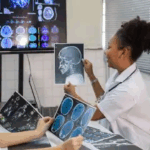
Contrast-enhanced ultrasound (CEUS) is revolutionizing diagnostic imaging by providing radiologists with unprecedented real-time clarity and detail. It enhances visualization of vascular structures and improves lesion detection, all without exposing patients to ionizing radiation. As the healthcare industry increasingly prioritizes patient safety and diagnostic precision, CEUS has rapidly gained acceptance in hospitals and outpatient clinics across the United States. This shift aligns perfectly with the growing emphasis on safer diagnostic alternatives.
CEUS vs Traditional Ultrasound: Seeing the Difference Clearly
While traditional ultrasound remains a cornerstone of diagnostic imaging, it has inherent limitations. Standard ultrasound uses sound waves to create real-time images based on tissue echogenicity, but it often struggles to clearly delineate subtle tissue differences or small vascular anomalies, which can lead to inconclusive or delayed diagnoses.
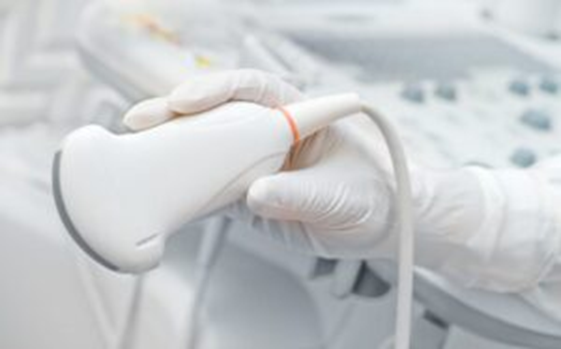
CEUS addresses these challenges by introducing specialized microbubble contrast agents. These microbubbles are gas-filled spheres that remain within the bloodstream, enhancing the ultrasound signal by reflecting sound waves more effectively than traditional tissue structures. This results in dramatically improved visualization of blood flow dynamics and vascular architecture.
The advantages of CEUS over traditional ultrasound can be summarized in the following comparison:
| Feature | Traditional Ultrasound | Contrast-Enhanced Ultrasound |
| Vascular Detail | Limited | Clear and detailed |
| Lesion Characterization | Moderate | Accurate and reliable |
| Safety | Very Safe | Very Safe, no radiation |
| Diagnostic Confidence | Good | Superior |
By enrolling in specialized CEUS training, professionals not only improve diagnostic accuracy but also fulfill continuing education requirements through ultrasound CME credits.

Why CEUS Adoption Is Exploding Across US Hospitals?
Multiple converging factors are driving the rapid growth of CEUS adoption in U.S. healthcare facilities:
- Technological Advances:
Recent innovations in ultrasound machines have boosted sensitivity and stability, making microbubble contrast imaging more reliable and accessible. Modern devices now integrate real-time software capable of processing enhanced signals without impacting examination duration.
- Patient Safety:
Microbubble contrast agents offer a substantial safety advantage over traditional iodinated or gadolinium-based contrast media, eliminating the risks of radiation exposure and nephrotoxicity. This benefit is pivotal for vulnerable patient groups such as those with renal impairment.
- Radiologist Education:
Radiologists who complete CEUS-focused continuing education notice marked improvements in their diagnostic confidence. Many are leveraging ultrasound CME credits to gain comprehensive knowledge of CEUS physics, clinical protocols, and safety practices. This educational support ensures practitioners maintain competence and lead in a rapidly evolving field.
How CEUS Improves Diagnosis and Patient Care?
The clinical utility of CEUS spans several specialties, underlining why its adoption is surging:
- Liver Imaging:
CEUS enhances the detection and characterization of focal liver lesions, including hepatocellular carcinoma (HCC) and metastatic tumors. By improving vascular pattern visualization, CEUS often reduces reliance on CT or MRI scans, which are more costly and less accessible.
- Cardiology:
In cardiac evaluations, microbubble contrast agents enhance the visualization of cardiac structures, including myocardial perfusion and intracardiac shunts, thereby supporting more accurate diagnoses of heart disease and its function.
- Renal and Other Organs:
CEUS detects perfusion abnormalities, vascular anomalies, and small lesions in the kidneys and other organs with exceptional clarity, facilitating timely intervention and treatment.
GetYourCEU: Fast-Track Your CEUS Expertise
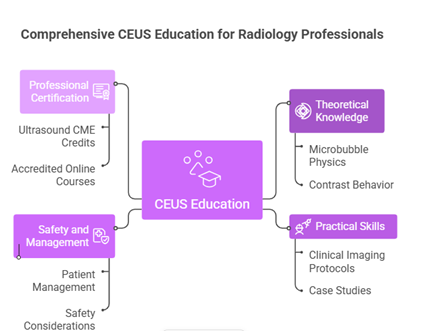
Proper education is essential to implementing CEUS safely and effectively. GetYourCEU offers comprehensive online courses to help prepare for contrast-enhanced ultrasound.
Contrast-Enhances Ultrasound Key Learning Topics
- Microbubble contrast physics and behavior
- Clinical imaging protocols for various organs
- Safety and patient management considerations
- Case studies demonstrating real-world application
For radiologists aiming to stay ahead, earning ultrasound CME credits through accredited online courses provides both knowledge and recognised professional certification.
Safety First: CEUS Protects Patients and Streamlines Workflows
Safety is one of CEUS’s most significant advantages. CEUS also reduces the need for repeat imaging studies, lowering patient anxiety and improving overall experience. This streamlining also benefits providers by improving workflow efficiency and reducing departmental costs.
| Benefit | Impact on Patients | Impact on Providers |
| Non-toxic Contrast | Safe for all patients | Fewer complications |
| Real-Time Imaging | Faster diagnosis | Improved workflow |
| Reduced Follow-Ups | Lower patient stress | Lower costs |
| Clear Lesion Detection | Accurate treatment planning | Fewer repeat scans |
Practical Steps to Bring CEUS Into Your Practice
Introducing CEUS into a practice requires thoughtful preparation:
- Complete CEUS-Focused CME Courses:
Ensure that all technical and medical staff involved in imaging procedures are certified through accredited courses to establish a baseline of knowledge and safety awareness.
- Upgrade Equipment:
Assess and upgrade ultrasound machines and software to support contrast-enhanced imaging fully. Verify that the hardware is compatible with microbubble detection and real-time processing.
- Standardize Protocols:
Develop and implement clear, consistent imaging protocols that comply with best practice guidelines, ensuring reliability and reproducibility in diagnostic results.
- Monitor Outcomes:
Utilize quality assurance tools to monitor diagnostic accuracy, patient feedback, and follow-up imaging rates, refining protocols as necessary to optimize clinical efficacy.
The Next Frontier: AI, CEUS, and the Future of Imaging
The future of CEUS is promising, with emerging applications poised to further transform imaging:
- Artificial intelligence (AI) algorithms are being integrated with CEUS, enhancing lesion detection accuracy and reducing diagnostic reporting times.
- Expansion into oncology, pediatrics, and interventional radiology will broaden CEUS’s impact across a wider range of patient populations.
- AI-powered analytics will enable precision imaging and personalized diagnostic protocols tailored to individual patient characteristics.
Take Action!
Contrast-enhanced ultrasound represents more than a technological upgrade; it is a fundamental advancement that enhances diagnostic precision, improves patient safety, and boosts departmental efficiency. By adopting CEUS and completing accredited training, radiologists gain greater confidence, compliance with education requirements, and a professional edge.
Boost your diagnostic expertise today, enroll in GetYourCEU’s courses and stay ahead in radiology.
FAQ
Q1: What is contrast-enhanced ultrasound (CEUS)?
CEUS is a diagnostic ultrasound technique that uses microbubble contrast agents to significantly improve the visualization of blood flow and tissue structures.
Q2: Is CEUS safe for all patients?
Yes. The microbubble agents are non-toxic and safe, including for patients with kidney impairment or allergies to traditional contrast.
Q3: How does CEUS differ from traditional ultrasound?
CEUS provides superior vascular detail and lesion detection, resulting in higher diagnostic confidence than standard ultrasound.
Q4: Can I earn continuing education credits with CEUS training?
Yes. Accredited courses in CEUS provide ultrasound CME credits necessary for professional licensing and certification.
Q5: Do clinics need special equipment for CEUS?
Most modern ultrasound machines can be upgraded with contrast-specific software or probes to perform CEUS effectively.